
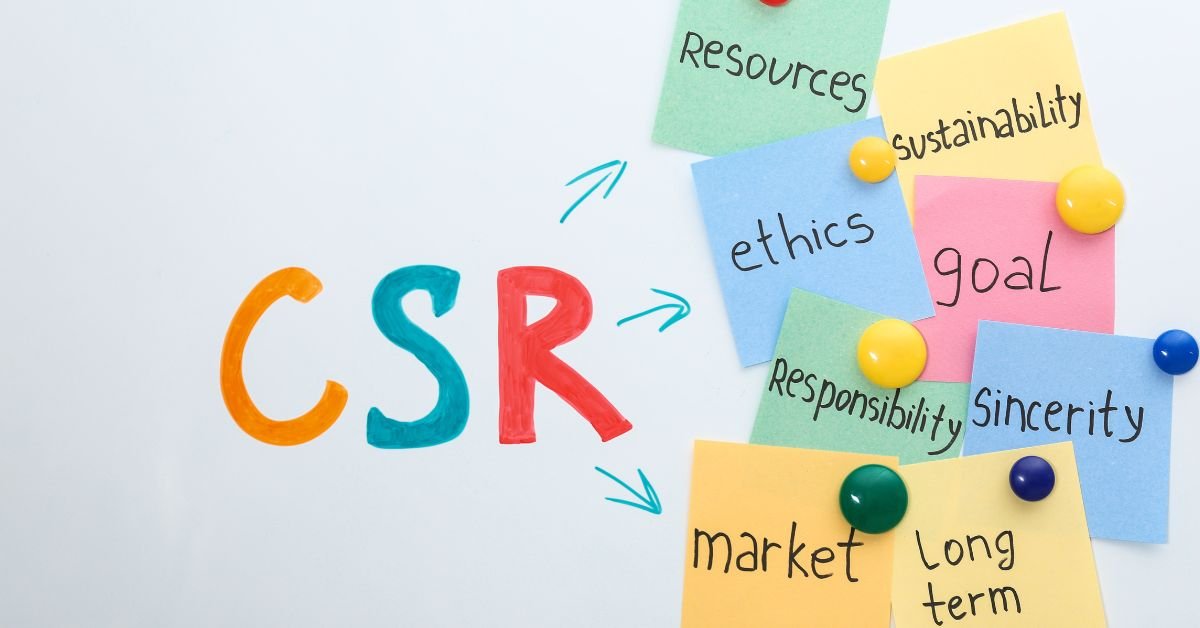
Corporate Social Responsibility has changed the way companies do business around the world. It is no longer enough for businesses to focus only on making profits. Today, companies must think about how their actions affect society and the environment. This shift represents a fundamental change in how we understand the role of business in our communities.
What is CSR?
Corporate Social Responsibility (CSR) refers to how companies take responsibility for their impact on society. It means businesses make efforts to act ethically and contribute positively to environmental and social issues. Simply put, CSR is about “doing well whilst doing good.”
When companies practise CSR, they consider more than just their bottom line. They think about their employees, customers, communities, and the planet. CSR includes everything from reducing pollution to treating workers fairly and supporting local communities.
The basic idea is that companies should be good citizens. Just like people have responsibilities to their communities, businesses have responsibilities too. These responsibilities go beyond following laws—they include doing what is right and helping to build a better world.
When Did CSR Emerge?
The concept of CSR has deep roots stretching back to the late 1800s. During this time, some business leaders began thinking about their impact on society as working conditions worsened. Early forms of CSR focused on charitable giving and improving labour conditions.
However, CSR as a formal concept emerged much later. In 1953, economist Howard Bowen published a groundbreaking book called “Social Responsibilities of the Businessman.” This work earned him the title “Father of CSR” because he was the first to properly define what social responsibility meant for businesses.
The 1950s and 1960s marked the “Awareness Era,” when companies started viewing themselves as stakeholders in society. During the 1970s, CSR evolved further as businesses began addressing specific social issues. By the mid-1970s, the “Responsiveness Era” began, and companies started integrating CSR into their core strategies.
The 1990s brought major developments. The idea of the “Triple Bottom Line” emerged, which measured a company’s social, economic, and environmental impact. This framework increased corporate accountability and pushed businesses to think beyond just financial profits.
In the 2000s, CSR became embedded in corporate strategy and governance. International frameworks like the UN Global Compact, ISO 26000, and the Global Reporting Initiative provided guidelines for companies to follow.
What Standards Govern CSR Activities?
Several international standards help guide CSR activities. These frameworks ensure companies approach social responsibility in consistent and meaningful ways.
ISO 26000
ISO 26000 is one of the most important international standards for social responsibility. Developed by the International Organisation for Standardisation in 2010, it provides guidance rather than requirements.
ISO 26000 is built on seven core principles: accountability, transparency, ethical behaviour, respect for stakeholder interests, respect for the rule of law, respect for international norms, and respect for human rights.
The standard also identifies seven core subjects: organisational governance, human rights, labour practices, the environment, fair operating practices, consumer issues, and community involvement and development. These subjects help companies address social responsibility across all areas of their operations.
UN Global Compact
The UN Global Compact aligns business strategies with universal principles on human rights, labour, environment, and anti-corruption. It helps companies operate responsibly in a globalised world.
Global Reporting Initiative (GRI)
The GRI produces a comprehensive sustainability reporting framework used worldwide. It enables companies to measure and report on their social responsibility issues and practices with transparency.
These standards work together to provide companies with practical tools for implementing CSR. They help businesses understand their responsibilities and measure their progress.
How CSR Works
Implementing CSR requires a structured approach. Companies cannot simply declare themselves socially responsible—they must follow a process to embed CSR into their operations.
Understanding CSR Challenges
The first step is understanding the fundamental issues and principles of CSR. Companies need to identify their stakeholders—customers, employees, investors, and local communities—and map out their interests and concerns.
Organisations must prioritise CSR issues that matter most to their business and stakeholders. This analysis creates a materiality matrix that guides the CSR approach in a targeted manner.
Identifying Impacts
Companies must assess and quantify their impacts on society and the environment. This step helps identify priority areas where the business needs to focus its efforts. The S in ESG: A Guide to Measure and Track Social Issues in ESG provides valuable insights into measuring social impacts effectively.
Developing CSR Strategy
After understanding impacts, companies develop specific CSR objectives. These should be ambitious yet achievable, following the SMART framework (Specific, Measurable, Achievable, Relevant, Time-bound).
Implementation and Communication
CSR must be embedded throughout the organisation. This means integrating CSR values into vision statements, policies, and daily operations. Companies need to communicate CSR initiatives both internally to employees and externally to customers and stakeholders.
Evaluation and Improvement
Successful CSR implementation requires ongoing evaluation. Companies must measure progress against their objectives and adjust strategies based on results. The Rise of the ESG Controller for Shaping Sustainable Business Practices in Malaysia explores how dedicated roles can drive CSR effectiveness.
Types of CSR
CSR encompasses four main categories, often visualised through Carroll’s CSR Pyramid. This model, developed by Professor Archie Carroll in 1991, illustrates the building blocks of corporate social responsibility.
Economic Responsibility
Economic responsibility forms the foundation of the pyramid. Companies must be profitable and financially viable to survive. However, this responsibility means earning money through ethical means and making financial decisions that promote long-term sustainability.
Economic CSR includes transparency about where money comes from, refusing to use products from countries known for slave or child labour, and stepping away from harmful practices even when they cost more.
Legal Responsibility
Legal responsibility means obeying laws and regulations. The law codifies what society considers acceptable and unacceptable behaviour. Companies must comply with all applicable laws, including labour standards, environmental regulations, and consumer protection rules.
This level ensures businesses operate within the legal framework of the societies where they conduct business.
Ethical Responsibility
Ethical responsibility goes beyond legal compliance. It involves doing what is right, just, and fair, even when laws do not require it. This includes fair labour practices, ethical sourcing, and transparent supply chains.
Companies with strong ethical responsibility build trust with stakeholders by demonstrating commitment to ethical practices beyond mere compliance. Understanding Sustainability vs ESG: What Every Business Owner Should Know helps clarify the ethical dimensions of business responsibility.
Philanthropic Responsibility
At the top of the pyramid sits philanthropic responsibility. This involves voluntary activities that exceed societal expectations, such as charitable giving and community engagement. Companies support communities through donations, employee volunteering programmes, and social initiatives.
Whilst philanthropic responsibilities might seem extra, today’s consumers actively expect companies to give back to their communities.
Benefits of CSR
Companies that embrace CSR enjoy numerous advantages across all aspects of their business.
Stronger Brand Reputation
CSR initiatives build positive corporate images, leading to increased trust, credibility, and revenue. Research shows that companies investing in social causes can see up to 20% higher revenue. In 2025, 77% of consumers prefer to buy from companies that actively engage in CSR initiatives.
Enhanced Employee Engagement and Retention
CSR positively impacts employee morale, motivation, and loyalty. When employees feel their employer contributes to social and environmental issues, they become more engaged and committed.
A 2025 survey found that 65% of people actively seek socially conscious employers. Companies with strong CSR programmes attract and retain top talent, as employees want to work for organisations that align with their values.
Improved Customer Loyalty
Consumer behaviour is shifting towards sustainability. In 2025, 72% of global consumers are willing to pay more for sustainable products. Additionally, 54% of global consumers consider a company’s CSR practices when making purchasing decisions.
Strong CSR strategies can increase customer satisfaction by 23%, whilst 77% of global consumers are more inclined to support companies with strong CSR programmes.
Reduced Risk and Greater Resilience
A robust CSR programme helps companies anticipate and navigate market shifts, regulatory changes, and reputational risks. By addressing issues like climate change, human rights, and supply chain transparency, businesses become more resilient.
Companies with strong CSR programmes recover from reputational crises up to four times faster than those without established social responsibility credentials. Companies’ Guide to Do Sustainable Procurement offers strategies for building resilient and responsible supply chains.
Better Stakeholder Relations
CSR improves relationships with various stakeholders, including employees, customers, investors, suppliers, and communities. Positive CSR initiatives foster long-term relationships based on trust and mutual benefit.
Notably, 73% of investors now actively consider ESG factors when making investment decisions, proving that corporate responsibility directly influences capital flows.
Operational Savings
Sustainable practices like energy efficiency, waste reduction, and responsible sourcing can significantly cut costs. CSR initiatives often lead to resource optimisation and improved operational efficiency.
Community Trust
Engaging with communities through partnerships builds mutual trust and lasting relationships. According to research, 85% of people are more likely to trust a company that actively engages with and supports the local community. How Malaysian Manufacturers Can Achieve Sustainability Maturity demonstrates practical approaches to building community trust through sustainable operations.
Company Examples
Many leading companies have successfully integrated CSR into their operations, setting examples for others to follow.
Patagonia
Patagonia has built its entire brand identity around environmental conservation. Through its “1% for the Planet” initiative, the company donates 1% of total sales to environmental groups, contributing over £140 million to grassroots organisations since 1985.
Their “Worn Wear” programme encourages customers to repair, share, and recycle clothing rather than buying new items. This approach reduces waste and pushes back against disposable fashion culture. Patagonia’s mission statement is clear: “We’re in business to save our home planet.”
Microsoft
Microsoft demonstrates leadership in CSR through climate action, AI ethics, and digital inclusion. Since 2020, Microsoft has trained more than 80 million people in digital skills through its Global Skills Initiative.
The company actively reduces water and energy use, cuts carbon emissions, and funds community-driven environmental projects. Microsoft also runs the Airband Initiative, expanding broadband access to underserved rural communities worldwide.
Unilever
Unilever’s Sustainable Living Plan aims to improve the health and well-being of 1 billion people whilst reducing the company’s environmental footprint. The plan drives their business strategy and aims to create positive social impact.
Unilever’s CSR strategy extends deep into its supply chain, ensuring responsible practices throughout its operations. Research shows that 78% of US consumers feel better when they buy sustainably produced products.
TOMS Shoes
TOMS pioneered the “One for One” business model, where for every pair of shoes purchased, they donate a pair to a child in need. This initiative has expanded to include eyewear and clean water projects, with the company contributing over £2 million to grassroots causes.
These examples demonstrate that CSR can be successfully integrated into diverse business models across different industries, creating genuine positive impact whilst building strong brands.
Taking Action on CSR
The evidence is clear: Corporate Social Responsibility benefits businesses, employees, communities, and the planet. As consumer expectations continue to evolve and stakeholders demand greater accountability, CSR has become essential for long-term business success.
Companies that embrace CSR build stronger brands, attract loyal customers, engage talented employees, and contribute to a better world. The journey towards social responsibility requires commitment, strategic planning, and ongoing evaluation, but the rewards—both for business and society—make it worthwhile.
Whether you are just beginning to explore CSR or looking to enhance existing initiatives, taking structured steps towards social responsibility positions your company for sustainable success in an increasingly conscious marketplace.
Ready to strengthen your CSR strategy? Discover how AsiaESG can help your organisation implement effective ESG and CSR practices. Our expert consultation services guide businesses through every step of their sustainability journey, from initial assessment to full implementation and reporting.