

Environmental, Social, and Governance (ESG) refers to a set of standards that assess how a company operates with respect to the planet and its people. In today’s business landscape, ESG has evolved from a voluntary initiative to a fundamental framework that shapes corporate strategy, investment decisions, and long-term value creation.
The ESG meaning in business extends beyond simple compliance. It encompasses how organisations manage environmental impacts, foster social responsibility, and maintain ethical governance structures. As stakeholder expectations rise and regulatory frameworks tighten globally, understanding what ESG is and why it matters has become essential for companies of all sizes.
Breaking Down the Three Pillars of ESG
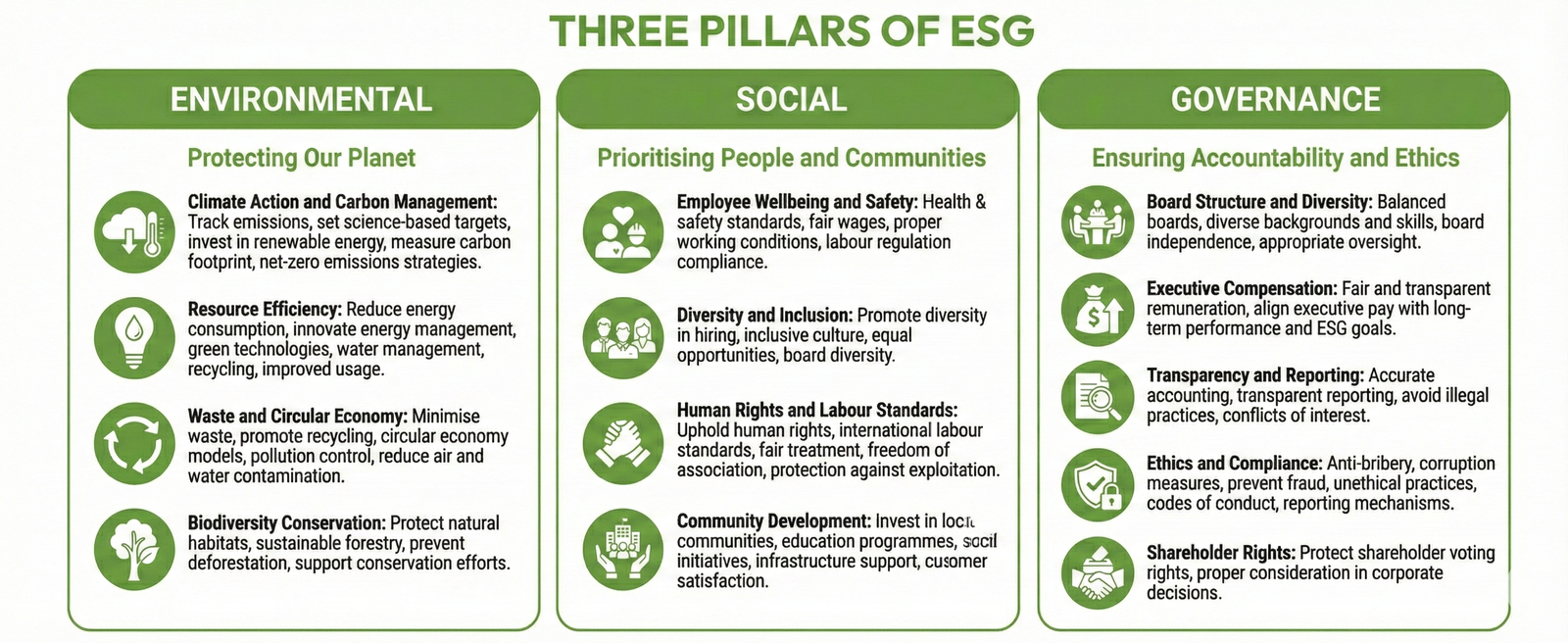
Environmental: Protecting Our Planet
The environmental component examines how companies act as stewards of nature. This pillar focuses on several critical areas:
- Climate Action and Carbon Management: Companies track greenhouse gas emissions across their operations, set science-based reduction targets, and invest in renewable energy sources. Leading organisations measure their carbon footprint and implement strategies to achieve net-zero emissions.
- Resource Efficiency: This includes reducing energy consumption through efficiency upgrades, implementing innovative energy management systems, and transitioning to green technologies. Water management also plays a crucial role, addressing scarcity through recycling programmes and improved usage efficiency.
- Waste and Circular Economy: Forward-thinking businesses minimise waste generation, promote recycling initiatives, and transition toward circular economy models where materials are continuously reused. Pollution control measures ensure companies reduce air and water contamination whilst adhering to environmental regulations.
- Biodiversity Conservation: Companies implement initiatives to protect natural habitats, prevent deforestation through sustainable forestry practices, and support conservation efforts.
Real-world examples demonstrate the environmental pillar’s impact. Taiwan High Speed Rail Corporation reduced electricity consumption per passenger by 12.38% in 2022, whilst implementing solar-powered stations and wastewater treatment facilities. Xinyi Solar, the world’s largest solar glass manufacturer, decreased energy consumption by 15.1% and water usage by 7.8% in the same year.
Social: Prioritising People and Communities
Social criteria evaluate how organisations manage relationships with employees, suppliers, customers, and communities. This pillar encompasses:
- Employee Wellbeing and Safety: Companies prioritise workplace health and safety standards, ensure fair wages, and maintain proper working conditions that comply with labour regulations. Tech Mahindra, for instance, achieved global IT leadership recognition in the Dow Jones Sustainability Index by embedding social principles into its core strategy.
- Diversity and Inclusion: Organisations promote diversity in hiring practices, create inclusive workplace cultures, and ensure equal opportunities regardless of gender, ethnicity, or background. These diversity and inclusion efforts extend to board composition, where diverse perspectives strengthen decision-making.
- Human Rights and Labour Standards: Ethical companies uphold human rights principles throughout their operations and supply chains, ensuring compliance with international labour standards. These human rights standards include fair treatment, freedom of association, and protection against exploitation.
- Community Development: Businesses invest in local communities through education programmes, social initiatives, and infrastructure support. Customer satisfaction measures ensure companies actively improve experiences through feedback and responsible business practices.
Hindustan Unilever exemplifies strong social performance by reducing waste by 55%, water usage by 48%, and CO2 emissions by 97% since 2008, whilst sourcing 100% of electricity from renewables. The company also established the Centre for Sustainability Leadership to help other Indian businesses achieve net-zero targets.
Governance: Ensuring Accountability and Ethics
Governance represents the backbone of ESG, shaping how companies are managed and controlled. Strong governance encompasses:
- Board Structure and Diversity: Effective governance requires balanced boards with diverse backgrounds, skills, and perspectives that strengthen strategic decision-making. Companies must ensure board independence and appropriate oversight mechanisms.
- Executive Compensation: Fair and transparent remuneration structures align executive pay with long-term company performance and ESG goals. These remuneration practices include linking bonuses to sustainability targets rather than relying solely on financial metrics.
- Transparency and Reporting: Organisations must maintain accurate accounting methods and transparent reporting practices. Investors seek assurances that companies avoid illegal practices and conflicts of interest when selecting board members.
- Ethics and Compliance: Anti-bribery and corruption measures prevent fraud and unethical business practices. Companies implement strict codes of conduct and establish reporting mechanisms for violations.
- Shareholder Rights: Good governance protects shareholder voting rights on important matters and ensures their interests receive proper consideration in corporate decisions.
The Evolution of ESG: From Concept to Business Imperative
Historical Development
The journey of ESG began long before the term existed. The 1960s environmental movement, sparked by Rachel Carson’s “Silent Spring,” first highlighted corporate accountability for ecological impacts. The 1987 Brundtland Commission introduced the concept of “sustainable development,” promoting economic growth without environmental degradation.
In 1994, John Elkington introduced the Triple Bottom Line framework, which balanced social, environmental, and economic impacts. However, the term “ESG” was officially coined in 2004 by the United Nations Global Compact in its “Who Cares Wins” report, which invited financial institutions to develop guidelines for integrating environmental, social, and governance issues into investment decisions.
The 2006 launch of the Principles for Responsible Investment (PRI) provided investors with a global framework for implementing ESG practices. The 2015 Paris Agreement marked a pivotal moment, creating worldwide momentum for climate-related disclosure, net-zero commitments, and sustainable finance policies.
Modern Momentum in 2026
As of 2026, ESG has entered a strategic phase characterised by implementation, integration, and assurance. Europe’s ESG framework is being recalibrated rather than rolled back, with focus shifting from regulatory volume to quality of execution. More than 50,000 EU-based companies must now report using European Sustainability Reporting Standards (ESRS).
In the Asia-Pacific region, momentum remains strong despite global political shifts. Singapore, Malaysia, and the Philippines are advancing mandatory ESG regulations, with Malaysia requiring ISSB-aligned reporting, including Scope 3 emissions, by 2027. Over 80% of CEOs in the Asia-Pacific region view ESG as essential to business resilience and growth.
Why ESG Is Important for Business Success
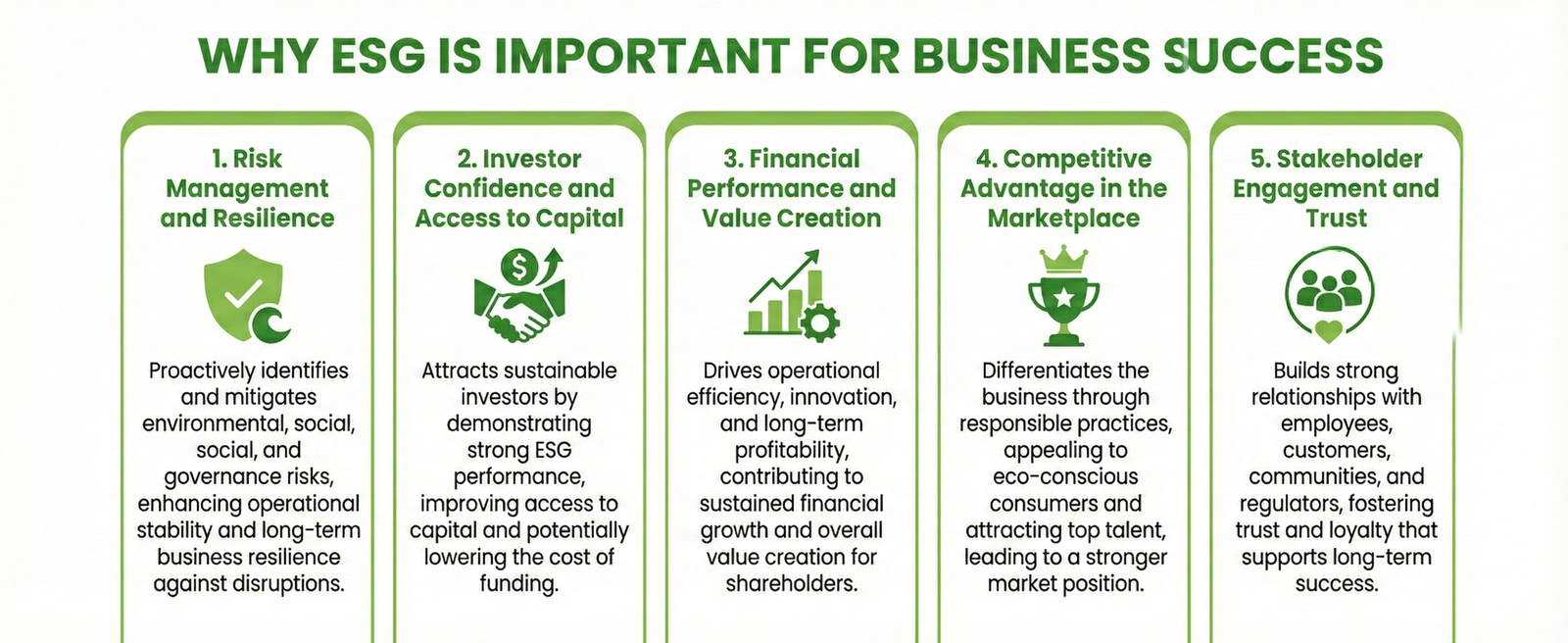
Risk Management and Resilience
ESG integration serves as a proactive risk management strategy that enhances long-term sustainability. Companies with firm ESG profiles are better positioned to navigate environmental, social, and governance challenges.
- Regulatory Compliance: Governments worldwide are tightening ESG regulations, shifting from voluntary guidelines to legally enforceable requirements. The EU’s Corporate Sustainability Due Diligence Directive (CSDDD) requires large companies to assess and mitigate ESG risks in their supply chains, whilst Germany’s Supply Chain Due Diligence Act imposes fines of up to 2% of global turnover on non-compliant companies. Malaysian companies, in particular, need to understand how carbon taxes, CBAM requirements, and ESG ratings will impact their compliance obligations.
- Operational Risk Reduction: ESG frameworks help businesses identify and manage risks related to climate change, supply chain disruptions, and social issues. Companies that fail to address ESG risks face regulatory penalties, reputational damage, and operational interruptions.
- Crisis Resilience: The Volkswagen emissions scandal demonstrates how a lack of ESG oversight can devastate company value, costing investors billions. Conversely, companies with robust ESG practices demonstrate greater resilience during market downturns, showing 20% less stock volatility.
Investor Confidence and Access to Capital
ESG performance has become a critical factor in global investment decisions. Institutional investors increasingly align their portfolios toward better ESG performance, recognising that responsible companies present lower long-term risks.
- Enhanced Creditworthiness: Companies with strong ESG ratings access capital markets at significantly lower rates. Research shows that ESG leaders obtain financing at an average interest rate of 6.8%, compared to 7.9% for ESG laggards. Banks and lenders offer preferential terms to companies with credible climate transition plans.
- Investment Flows: The market share of ESG funds in Asia has doubled since 2020, with Asian-focused ESG fund inflows growing faster than any other region. The number of Asian signatories to the PRI doubled between 2020 and 2023, surpassing 500 members.
- Stakeholder Trust: Transparent ESG reporting builds investor confidence by demonstrating accountability and commitment to responsible practices. Credit rating agencies and index providers embed ESG scores into their methodologies, directly impacting capital flows and the cost of capital. Conducting a gap analysis of sustainability performance through frameworks like EcoVadis helps companies understand their current position and identify improvement areas.
Research consistently reveals a positive correlation between ESG performance and corporate financial performance, with strong ESG companies achieving higher equity returns. A meta-analysis of over 2,200 studies confirms this relationship, particularly at the firm level rather than the portfolio level.
Financial Performance and Value Creation
ESG initiatives deliver tangible financial benefits beyond risk mitigation:
- Cost Reduction: Implementing energy-efficiency measures, waste-reduction programmes, and resource optimisation generates substantial operational savings. Starbucks’ Greener Store initiative, which implemented low-energy equipment and water-saving fixtures, reduced energy and water use by approximately 30%, saving the company around $60 million annually.
- Revenue Growth: Sustainable companies differentiate themselves by appealing to customers who prioritise ethical practices. Consumer interest in sustainable products creates opportunities for premium pricing and higher revenues.
- Operational Efficiency: Good governance reduces regulatory friction, lowers compliance costs, and streamlines risk management. Companies that implement innovative technologies and sustainable practices often discover hidden inefficiencies and create cost-saving opportunities at scale.
- Long-term Profitability: Studies show pioneering SMEs achieve above-average sales and profitability compared to industry peers. Companies with top ESG ratings demonstrate better financial performance, particularly regarding higher equity returns.
Competitive Advantage in the Marketplace
ESG has transformed from a “nice-to-have” to a strategic differentiator that creates competitive advantages:
- Brand Reputation and Customer Loyalty: Consumers demonstrate 88% more loyalty to companies that champion sustainability and ethical impact. ESG builds brand equity that marketing alone cannot achieve. Modern consumers expect companies to act responsibly and contribute positively to society, influencing purchasing decisions and fostering brand loyalty.
- Talent Attraction and Retention: Today’s workforce chooses meaning over money, with employees in sustainability-oriented companies being 15 times more likely to rate their employer as “a great place to work”. Companies with visible ESG commitments retain top talent longer and reduce attrition-related costs.
- Market Access and Business Partnerships: ESG certification supported by reported data has become critical for supply chain relationships. Buyers require ESG data to ensure regulatory compliance and protect themselves from association with unethical practices. Strong ESG performance opens doors to new markets and partnership opportunities.
- Innovation Driver: ESG encourages companies to evaluate operations and identify areas for improvement, often leading to innovative solutions that enhance efficiency and minimise environmental impact. These ESG-driven innovations create opportunities for growth and long-term value creation.
DBS Bank demonstrates competitive advantage through ESG leadership, growing its sustainable finance portfolio to SGD 61 billion by providing loans, bonds, and trade financing to accelerate companies’ transitions into sustainable business models. The bank established Singapore’s first net-zero building and won awards for its green bond work.
Stakeholder Engagement and Trust
Effective stakeholder engagement forms the foundation of a successful ESG strategy. Companies that actively listen to employees, customers, investors, suppliers, communities, and regulators gain invaluable insights into material ESG issues.
- Building Credibility: Transparent ESG reporting demonstrates accountability and reinforces commitment to responsible practices. When organisations openly share ESG goals, achievements, and challenges, they build credibility and foster trust.
- Enhanced Decision-Making: Collaboration with stakeholders enriches decision-making by incorporating diverse viewpoints. Stakeholders provide valuable knowledge that helps companies identify potential impacts and improvement opportunities.
- Risk Identification: Engaging with local communities highlights specific environmental and social concerns, guiding targeted initiatives. Projects with highly engaged stakeholders achieve a 78% success rate compared to just 40% for those with low engagement.
- Meeting Expectations: Stakeholders, including investors, customers, employees, and communities, demand greater transparency and accountability from businesses. ESG reporting provides a comprehensive view of a company’s impact, strengthening relationships with those who share similar values.
Implementing ESG: A Practical Roadmap
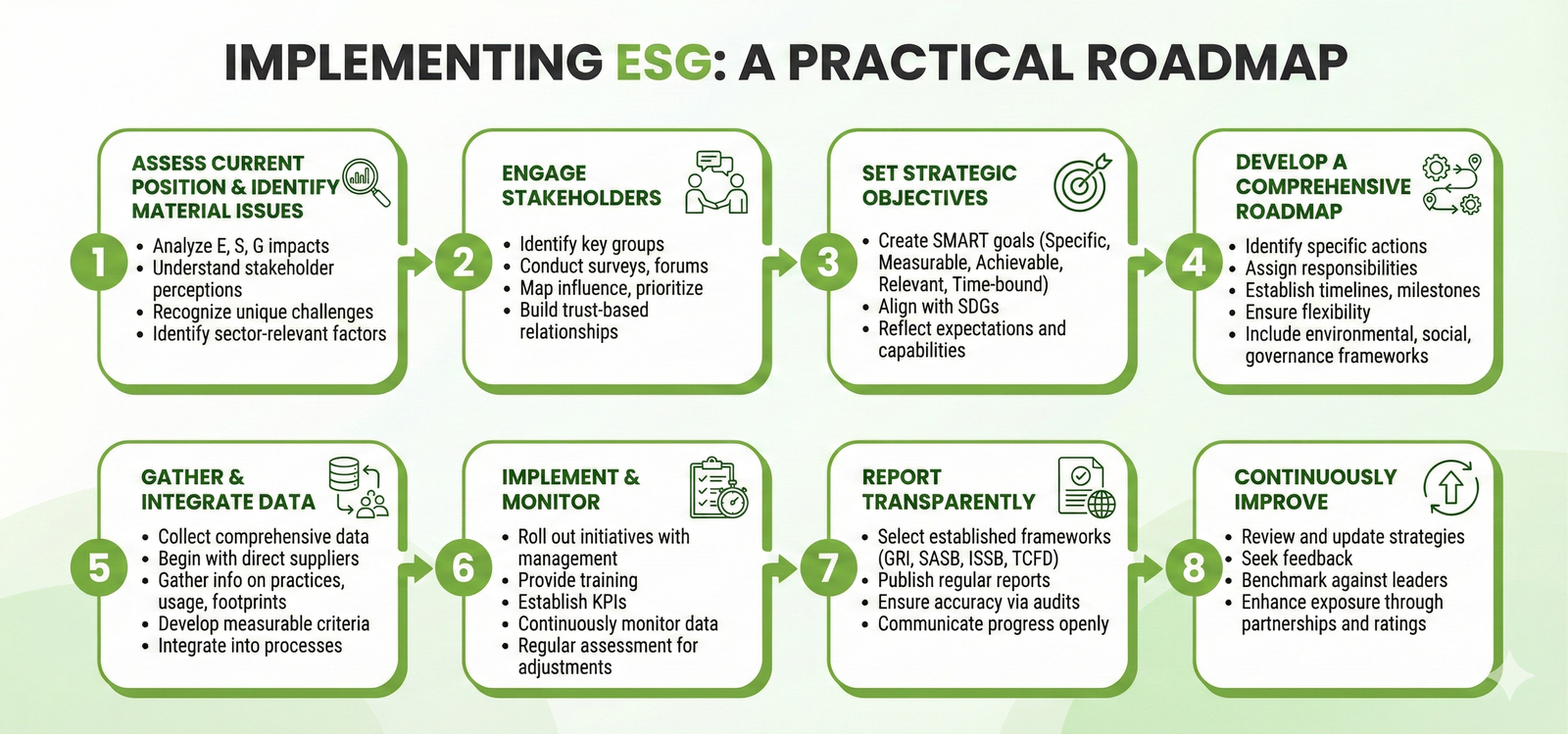
Step 1: Assess Current Position and Identify Material Issues
Begin by conducting a comprehensive evaluation of your company’s current ESG standing. This evaluation involves:
- Analysing environmental impacts, social relationships, and governance structures
- Understanding stakeholder perceptions through surveys and consultations
- Recognising that each business faces unique ESG challenges based on industry and operations
- Identifying which ESG factors are most relevant to your sector and stakeholders
Financial institutions may face heightened social and governance risks, whilst manufacturing or real estate companies often grapple with environmental concerns.
Step 2: Engage Stakeholders
Understanding stakeholder expectations proves crucial for developing relevant ESG strategies:
- Identify key stakeholder groups, including employees, customers, investors, suppliers, communities, and regulators.
- Conduct surveys, interviews, focus groups, or public forums to gather input.
- Map stakeholder influence and prioritise engagement efforts accordingly
- Build trust-based relationships by regularly communicating about ESG efforts.
Step 3: Set Strategic Objectives
Establish clear, measurable objectives that provide targets and help mobilise your organisation:
- Create SMART goals (Specific, Measurable, Achievable, Relevant, Time-bound)
- Examples include reducing greenhouse gas emissions by 20% within five years or achieving zero waste to landfill by a specific date.
- Align objectives with Sustainable Development Goals (SDGs) to ensure your sustainability policies contribute to global targets
- Ensure goals reflect both stakeholder expectations and business capabilities.
Step 4: Develop a Comprehensive Roadmap
A structured ESG roadmap guides companies toward sustainability objectives:
- Identify specific actions required to reach each objective.
- Assign responsibilities to teams and individuals.
- Establish timelines and milestones for tracking progress.
- Ensure the roadmap remains flexible to adapt to changing business conditions.
- Include frameworks that cover environmental initiatives, social responsibility programmes, and governance improvements.
Step 5: Gather and Integrate Data
Collect comprehensive data across operations and supply chains:
- Begin with direct suppliers, focusing on key ESG factors identified in Step 1
- Gather information on employment practices, resource usage, carbon footprints, and labour conditions.
- Develop measurable ESG criteria using collected data.
- Work with different departments to integrate criteria into operational processes.
Step 6: Implement and Monitor
Execute your ESG strategy with hands-on support and tracking mechanisms:
- Roll out initiatives across operations with dedicated project management.
- Provide training to ensure teams understand ESG objectives and their roles.
- Establish key performance indicators (KPIs) to measure progress.
- Continuously monitor sustainability data to identify risks and opportunities.
- Regular assessment helps companies stay on track and make necessary adjustments.
Step 7: Report Transparently
Demonstrate accountability through transparent ESG reporting:
- Select established frameworks like GRI, SASB, ISSB, or TCFD based on stakeholder expectations.
- Publish reports regularly with data-backed information.
- Ensure accuracy through third-party verification and independent audits.
- Communicate progress openly, including both achievements and challenges.
Step 8: Continuously Improve
ESG implementation requires ongoing commitment and refinement:
- Review and update strategies regularly based on performance data.
- Seek stakeholder feedback to improve practices.
- Benchmark against industry leaders to identify improvement opportunities.
- Enhance exposure through ESG-focused media partnerships and ratings.
ESG Reporting Frameworks and Standards
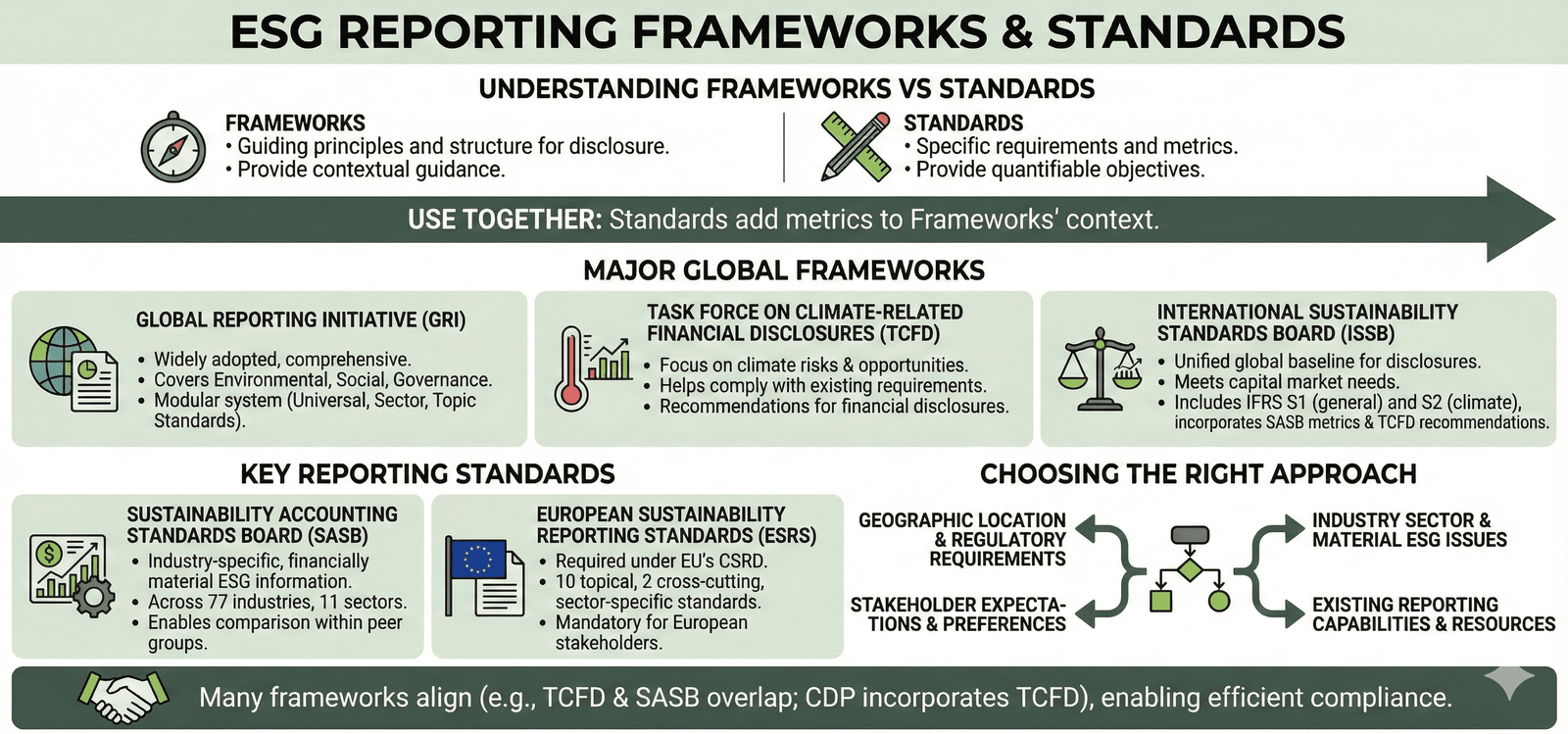
Understanding Frameworks vs Standards
ESG reporting frameworks provide guiding principles and structure for sustainability disclosure, whilst standards give specific requirements and metrics. Both should be used together, with standards providing quantifiable objectives to frameworks’ contextual guidance.
Major Global Frameworks
- Global Reporting Initiative (GRI): The most widely adopted framework globally, GRI offers comprehensive guidelines covering environmental, social, and governance topics. Its modular system includes Universal Standards, Sector Standards, and Topic Standards, providing flexibility whilst ensuring depth.
- Task Force on Climate-related Financial Disclosures (TCFD): Focused specifically on climate-related risks and opportunities, TCFD recommendations help organisations comply with existing reporting requirements rather than imposing additional standards.
- International Sustainability Standards Board (ISSB): Established in 2021, ISSB delivers a unified global baseline for ESG disclosures that meet capital market needs. Its IFRS S1 (general sustainability) and S2 (climate-related) standards directly incorporate SASB metrics and TCFD recommendations.
Key Reporting Standards
- Sustainability Accounting Standards Board (SASB): These industry-specific standards focus on financially material ESG information across 77 industries in 11 sectors. SASB enables comparison between companies within peer groups.
- European Sustainability Reporting Standards (ESRS): Required under the EU’s Corporate Sustainability Reporting Directive (CSRD), ESRS includes 10 topical ESG standards, two cross-cutting standards, and additional sector-specific standards in development. These mandatory standards enhance transparency and decision-usefulness for European stakeholders.
Choosing the Right Approach
Companies should select frameworks and standards based on:
- Geographic location and regulatory requirements
- Industry sector and material ESG issues
- Stakeholder expectations and preferences
- Existing reporting capabilities and resources
Many frameworks intentionally align with one another, enabling companies to meet multiple requirements efficiently. For example, TCFD and SASB share overlapping disclosures, whilst CDP incorporates most TCFD requirements.
Addressing Greenwashing Concerns
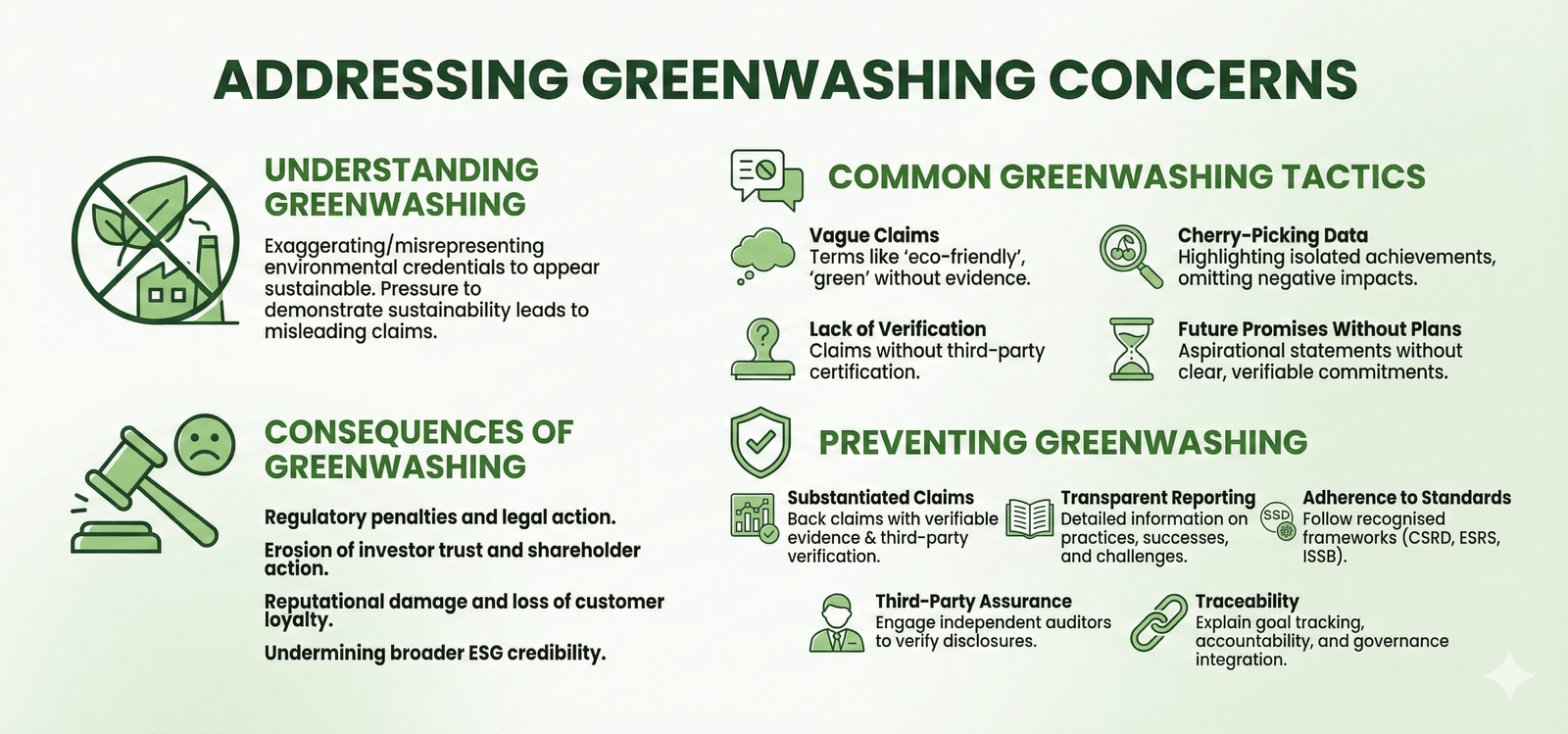
Understanding Greenwashing
Greenwashing occurs when businesses exaggerate or misrepresent their environmental credentials to appear more sustainable than they actually are. As ESG standards have become central to corporate strategy, pressure to demonstrate sustainability has led to a surge in misleading claims.
Common Greenwashing Tactics
Companies engaging in greenwashing typically employ several strategies:
- Vague Claims: Using terms like “eco-friendly,” “green,” or “sustainable” without providing evidence or specific data
- Cherry-Picking Data: Highlighting isolated achievements whilst omitting larger negative impacts
- Lack of Verification: Making claims without third-party certification or independent verification
- Inconsistent Reporting: Misaligning claims across different communications channels
- Future Promises Without Plans: Making aspirational statements about future performance without clear, verifiable commitments and implementation plans
Consequences of Greenwashing
The impacts of greenwashing, whether intentional or not, can be severe:
- Regulatory penalties and legal action as authorities increase enforcement
- Erosion of investor trust and potential shareholder action
- Reputational damage and loss of customer loyalty
- Undermining the credibility of the broader ESG movement
Preventing Greenwashing
Companies can ensure authentic ESG disclosure through several measures:
- Substantiated Claims: Back all environmental and social claims with clear, verifiable evidence, including methodologies, data sources, and third-party verification.
- Transparent Reporting: Provide detailed information about ESG practices, making it easy for stakeholders to assess validity. Include both successes and challenges in reports.
- Adherence to Standards: Follow recognised frameworks like CSRD, ESRS, and ISSB standards that provide clear guidelines for measuring ESG performance.
- Third-Party Assurance: Engage independent auditors to verify ESG disclosures, enhancing credibility and trust.
- Traceability: Explain how ESG goals are tracked, who holds accountability, and how they integrate into governance structures.
The Future of ESG: Trends Shaping 2026 and Beyond
Standardisation and Convergence
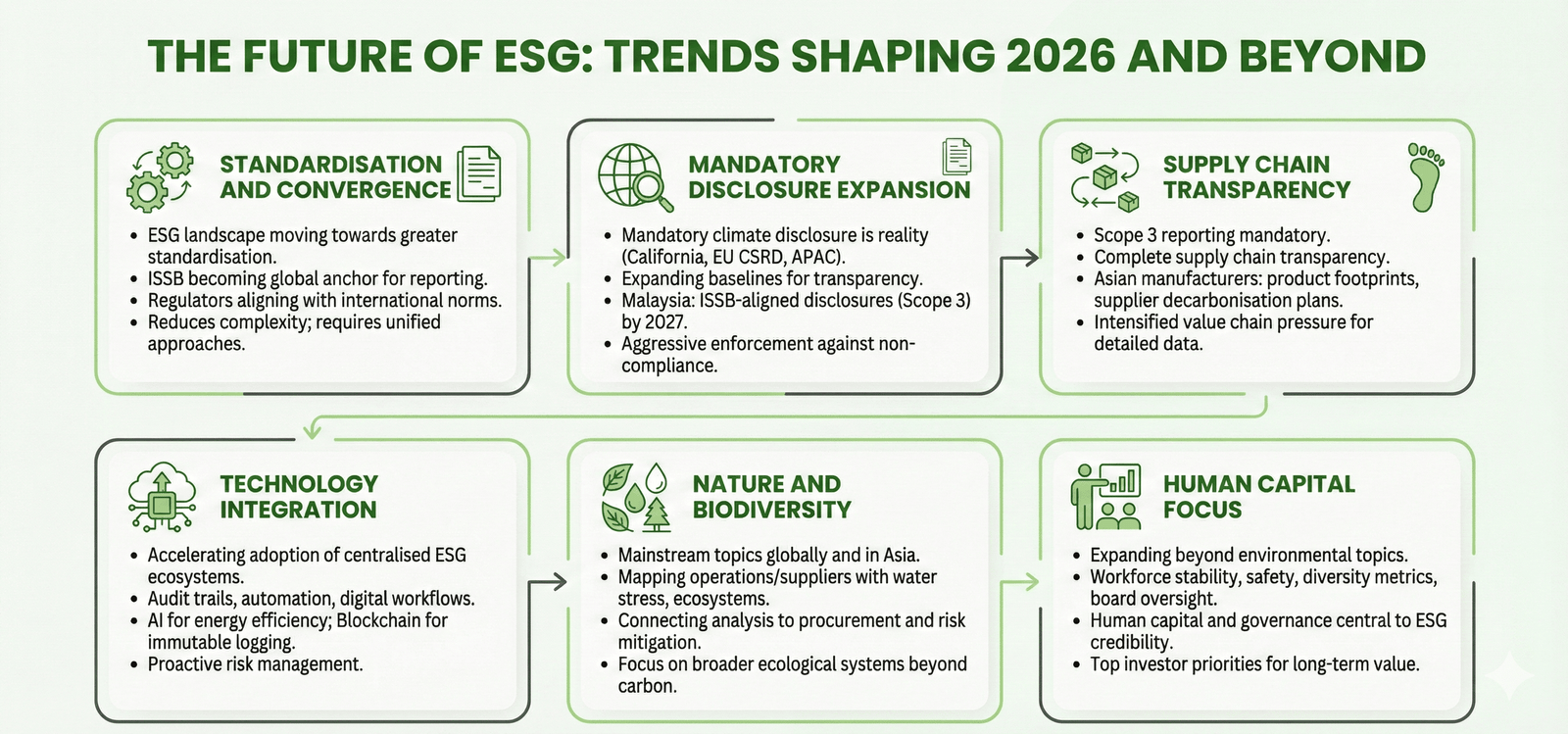
The ESG landscape is moving toward greater standardisation and interoperability. ISSB is becoming the global anchor for climate and sustainability reporting, with regulators expected to align more closely with international norms. This convergence reduces long-term complexity whilst requiring companies to unify their approaches across multiple frameworks.
Mandatory Disclosure Expansion
Mandatory climate disclosure has become a reality across multiple jurisdictions. California’s climate disclosure laws, the EU’s CSRD, and Asia-Pacific regulations create expanding baselines for transparency. By 2027, Malaysia will require listed companies to report ISSB-aligned disclosures, including Scope 3 emissions, with aggressive enforcement against non-compliant firms.
Supply Chain Transparency
Scope 3 emissions reporting is becoming mandatory, pushing for complete supply chain transparency. For Asian manufacturers and exporters serving global buyers, this means providing product footprints, supplier decarbonisation plans, and evidence of progress. Value chain pressure intensifies as customers request detailed ESG data throughout supply networks.
Technology Integration
Companies are accelerating the adoption of centralised ESG data ecosystems with audit trails, automation, and digital reporting workflows. AI-driven solutions optimise energy efficiency, whilst blockchain provides immutable logging for audit readiness. Technology helps organisations transition from reactive to proactive risk management.
Nature and Biodiversity
Nature, biodiversity, and deforestation are becoming mainstream business topics in Asia and globally. Companies are mapping where operations and suppliers intersect with water stress, flood risk, or sensitive ecosystems, then connecting that analysis to procurement standards and risk mitigation. This shift recognises that sustainability extends beyond carbon to encompass broader ecological systems.
Human Capital Focus
ESG considerations are expanding beyond environmental topics to include workforce stability, safety, diversity metrics, and board oversight. Human capital and governance quality remain central to establishing ESG credibility and represent top priorities for investors evaluating long-term value.
Taking Action: Your ESG Journey Starts Here
Understanding what ESG means and why it matters for business represents only the first step. Genuine commitment to environmental, social, and governance principles requires consistent action, measurable targets, and authentic integration into core operations.
Whether your organisation is just beginning its ESG journey or seeking to enhance existing initiatives, professional guidance can accelerate progress and ensure effective implementation. Expert consultation helps companies navigate complex regulatory requirements, select appropriate frameworks, and develop strategies that deliver both sustainability impact and business value.
Ready to strengthen your ESG strategy and unlock the benefits of sustainable business practices? Discover how AsiaESG’s consultation services can support your organisation’s sustainability transformation. Our team provides tailored guidance to help you assess current performance, set meaningful objectives, implement robust reporting systems, and achieve your environmental, social, and governance goals.
Frequently Asked Questions
What does ESG stand for?
ESG stands for Environmental, Social, and Governance, three pillars that measure how organisations operate regarding the planet, people, and corporate accountability.
Why is ESG important for investors?
Investors use ESG criteria to screen investments because companies with strong ESG performance demonstrate lower risk, better long-term resilience, and higher potential for sustainable returns.
How does ESG differ from Corporate Social Responsibility (CSR)?
CSR represents voluntary ethical commitments, whilst ESG provides measurable, data-driven criteria for assessing environmental, social, and governance impacts, with a focus on risk management and financial materiality.
What are the main ESG reporting frameworks?
Major frameworks include GRI (Global Reporting Initiative), TCFD (climate-focused), ISSB/IFRS standards, SASB (industry-specific), and ESRS (European standards).
How can small businesses implement ESG?
Small businesses can start by identifying material ESG issues, engaging stakeholders, setting achievable targets, measuring key metrics, and reporting progress transparently using established frameworks.
What is greenwashing, and how can companies avoid it?
Greenwashing involves exaggerating sustainability credentials through vague claims or misleading information. Companies avoid it by providing verifiable data, third-party verification, transparent reporting, and adherence to recognised standards.
Are ESG regulations mandatory?
ESG regulations vary by jurisdiction. The EU’s CSRD requires mandatory reporting for large companies, whilst Asian markets such as Malaysia and Singapore are implementing phased, compulsory disclosure requirements.
How does ESG impact financial performance?
Research shows companies with strong ESG performance often achieve higher equity returns, lower capital costs (6.8% vs 7.9% interest rates), reduced operational expenses, and increased profitability.